


🌿 Factory Direct Manufacturing Secrets: How are Cornstarch Tableware Made Through Compression Molding?
From Powder to High-Strength Tableware — The Complete Guide to Compression Molding Technology
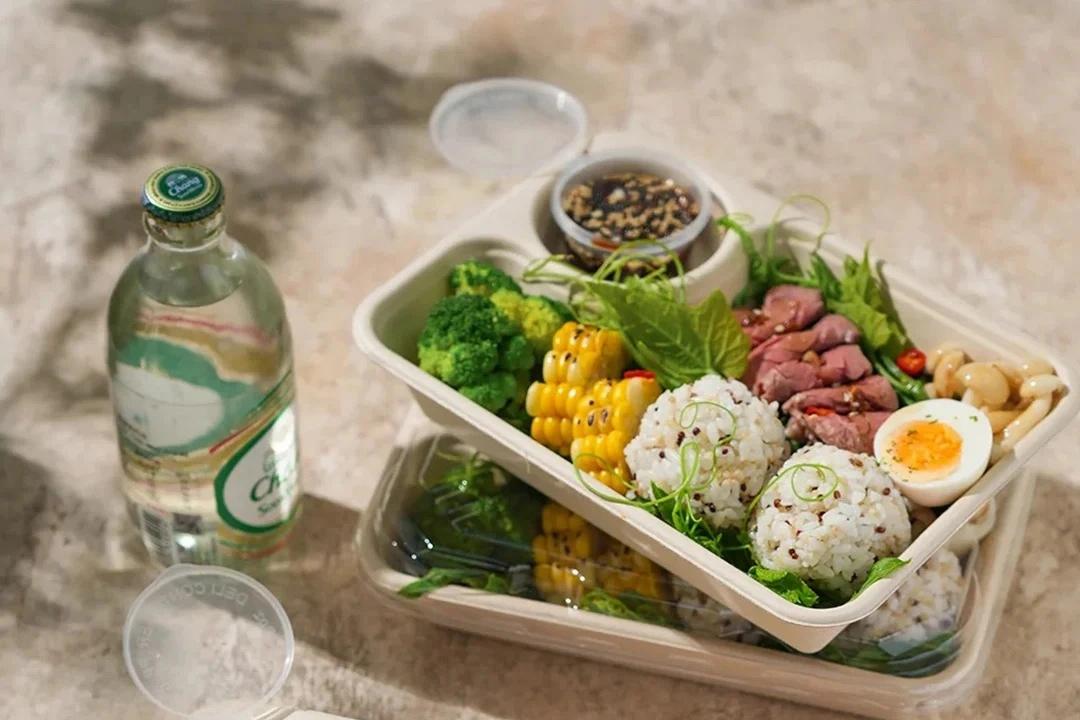
Many customers ask: "Since cornstarch tableware contains bio-based materials, how does it transform from a pile of powder into hard, heat-resistant lunch boxes and bowls?"
The answer is—Compression Molding.
This is currently the most mature and core production process for manufacturing high-density, high-strength environmentally friendly cornstarch tableware. Below, we will break down its principles and technological advantages in detail.
I. What is Compression Molding of Cornstarch Tableware?
Compression molding (also known as molding or compression forming) refers to the process of placing modified cornstarch raw materials (preheated modified powder or quantitative granules) into a preheated, high-precision metal mold cavity. Through the dual action of high-temperature heating and mechanical high pressure, the raw materials melt, flow, and fill the entire mold, ultimately solidifying into the desired shape (such as plates, bowls, takeout boxes, and compartmentalized lunch boxes).
II. Complete Process Flow of Corn Starch Tableware Compression Molding (CMP)
Unlike ordinary rubber compression molding, corn starch tableware uses plant bio-based polymer compression molding (CMP), with an extremely precise production process:
- Raw Material Pre-mixing and Batching: Natural corn starch is mixed with bio-based resins (such as PP/PBAT), coupling agents, and reinforcing fibers in a specific ratio, and then modified and preheated.
- Precise Quantitative Feeding: The preheated corn starch mixture is precisely weighed using automated equipment and placed into a preheated metal mold.
- Mold Closure and High-Pressure Heating: The mold is closed, and the temperature is raised to the set temperature (usually between 150°C and 180°C), while a high-pressure cylinder applies tens or even hundreds of tons of downward pressure.
- Melting and Flowing: Under high temperature and pressure, the cornstarch mixture undergoes physical and chemical changes, fully melting and perfectly adhering to every detail of the mold's inner wall (including anti-slip textures, reinforcing ribs, and brand logo).
- Pressure Holding, Curing, and Cooling: Pressure holding and shaping ensure the tableware achieves optimal density and flexural strength, followed by cooling and curing.
- Demolding and Ejection: The mold opens, and a pneumatic or mechanical ejection mechanism smoothly ejects the formed tableware.
- Automated Trimming and Polishing: Fine trimming of the tableware's edges, followed by inspection and packaging.
III. Why is Compression Molding the Preferred Method for Corn Starch Tableware? Four Major Technological Advantages
Compared to conventional injection molding or vacuum forming, compression molding brings irreplaceable physical properties and commercial value to cornstarch tableware:
1. Enables High Filling Degree and Material Modification (Stronger Mechanical Properties)
Cornstarch is a natural polymer material, and its flowability is not as good as pure petroleum-based plastics. Compression molding does not rely on high-flow extrusion, allowing for a high proportion of cornstarch and plant fiber fillers. This significantly improves the hardness, flexural strength, and crack resistance of the tableware, and also gives the product a natural bio-based feel.
2. Excellent Heat Resistance and Structural Stability
Through high-temperature molding and curing, the molded cornstarch tableware has a dense molecular structure and extremely high density. This gives compression-molded tableware excellent heat resistance (typically able to withstand -20°C to 120°C), and it does not soften, deform, or leak oil or water when microwaved or frozen.
3. Lower Mold Costs, Suitable for Large and Deep Tableware with Complex Wall Thicknesses
Compared to complex multi-cavity injection molds, compression molding molds are simpler, more durable, and lower in development costs. For larger products or products with varying wall thicknesses, such as plates, deep soup bowls, and multi-compartment lunch boxes, compression molding ensures extremely uniform wall thickness and extremely stable stress distribution.
4. Exquisite Surface Details, Supports Diverse Customization
High-pressure molding perfectly replicates the microscopic texture of the mold surface. Whether it's a matte frosted texture, a glossy non-stick finish, or directly molding customer's brand logo and environmental certification marks onto the bottom of the tableware, the compression molding process delivers exceptionally clear and aesthetically pleasing results.
IV. Summary: An Environmentally Friendly Transformation from Crops to the Table
Compression molding not only endows cornstarch tableware with practicality and durability comparable to traditional plastics, but also preserves its environmentally friendly nature as a natural bio-based material.
As a source factory, we rely on advanced multi-station automated compression molding production lines to achieve precise control over the entire process, from raw material proportioning and molding temperature control to finished product trimming. No matter what size, depth, or compartmentalized shape of your takeout containers and bowls, we can provide you with cost-effective, high-quality B2B customized solutions through compression molding technology!