


2026 Global Guide to Importing Biodegradable Plastic Cups and Cutlery
Mexico and Central America Market: Sourcing and Composting Guidelines for PLA Cups, Compostable Lids, and CPLA Cutlery
Quick Summary
Biodegradable plastic cups and cutlery generally refer to PLA cold cups, PLA cup lids, CPLA forks, CPLA spoons, CPLA knives, individually packaged compostable cutlery sets, and select cornstarch cutlery. These products differ from paper cups, kraft paper bowls, or bagasse containers because they are typically classified as plastic-based compostable food service products during import and local compliance checks.
For importers in Mexico and Central America, the safest workflow is: Identify Products → Confirm HS Code with Local Customs Agent → Submit Samples and Certificates for Local Review → Confirm Any Local Registration or Compliance Requirements → Place Order → Arrange Production → Prepare Export Documents → Complete Customs Clearance → Commercial Distribution.
Key Points
| Key Points | Explanation |
|---|---|
| PLA Cup Uses | Mainly used for cold drinks: iced coffee, juice, milkshakes, milk tea, yogurt, desserts, chilled takeaway beverages |
| CPLA Advantages | Stronger and more heat-resistant than ordinary transparent PLA, better suited for forks, spoons, knives, and cutlery sets |
| Classification Notes | PLA cups, PLA lids, and CPLA cutlery should not be considered paper products or molded fiber packaging during customs inspection |
| Early Inspection | Use product samples, declaration of materials, specifications, compostability certificate, and food contact report |
| Document Preparation | Commercial invoice, packing list, carton specifications, gross weight and net weight, CBM, loading plan, and bill of lading should be prepared after order confirmation |
I. What are Biodegradable Plastic Cups and Cutlery?
Biodegradable plastic cups and cutlery are single-use food service products made from plant-based or compostable plastic alternatives. In actual import and procurement discussions, this product group typically includes:
- PLA cold cups
- PLA flat lids, PLA dome lids, PLA straw lids
- CPLA forks, CPLA spoons, CPLA knives
- Individually packaged compostable cutlery sets
- Selected cornstarch cutlery
Key Reminder: The word "plastic" still matters. Although PLA, CPLA, and cornstarch materials are marketed as biodegradable or compostable alternatives, customs and regulatory agencies generally consider them plastic food service products because their form, application, and end use are closer to plastic products.
II. Biodegradable Plastic Cups: PLA Cold Cups
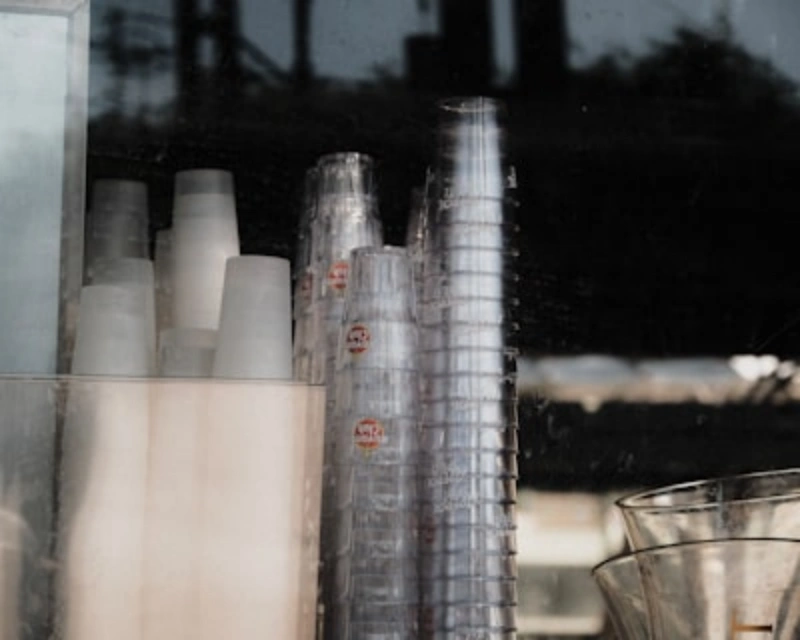
PLA (polylactic acid) is a plant-based bioplastic. For food service buyers, PLA cups offer the advantage of providing the transparent appearance of plastic while supporting compostable packaging goals. Main uses: Iced coffee, cold brew, juice, milkshakes, milk tea, yogurt, desserts, fruit cups, cold salads, event drinks. ⚠️ Important Limitations: PLA cups should not be used for hot drinks.
III. Biodegradable Plastic Cup Lids: PLA Flat Lids, Dome Lids, and Straw Lids
| Type | Application |
|---|---|
| PLA Flat Lid | Standard Cold Drinks |
| PLA Dome Lid | Whipped Cream, Milkshake Toppings |
| PLA Straw Lid | Cold Drink Delivery |
IV. Biodegradable Plastic Cutlery: CPLA Forks, Spoons, and Knives
CPLA (Crystalline Polylactic Acid) has better rigidity, opacity, and heat resistance. Application scenarios: Takeout meals, restaurants, airline meals, hotel breakfasts, chain restaurants, food delivery platforms, schools, supermarkets, institutional catering. Individual packaging improves food safety perception.
V. Cornstarch Cutlery as Another Alternative
Cornstarch cutlery includes plates, bowls, containers, trays, clamshell boxes, forks, spoons, knives, etc. Before importing, confirm the material declaration, compostability certificate, and food contact report.
VI. HS Code: Practical Reference
| Product Group | International HS Reference | Mexican National Reference | Tariff Rate |
|---|---|---|---|
| PLA Cold Cups | HS 3924.10 | 3924.10.01 | 10-15% |
| CPLA Forks/Spoons/Knives | HS 3924.10 | 3924.10.01 | 10-15% |
| PLA Cup Lids | HS 3923.50 | 3923.50.01 | 10% |
| Plastic Boxes/Cartons | HS 3923.10 | 3923.10.01 | 15% |
⚠️ Important: The above are practical reference codes. The final customs code must be confirmed by the importer's local licensed customs agent before shipment.
VII. Mexican Policy Environment: Key Updates 2026
7.1 New Circular Economy Law (Enacted January 19, 2026)
Mexico enacted the General Law on Circular Economy (LGEC), establishing a national circular economy system. Producers and importers may be required to implement circular management plans.
7.2 Mexico City (CDMX) SEDEMA Registration
According to NACDMX-010-AMBT-2019, compostable plastic products must comply with NMX-E-273-NYCE-2019, with heavy metal limits: Arsenic ≤ 0.1 mg/kg, Cadmium ≤ 0.7 mg/kg, Lead ≤ 45 mg/kg, Mercury ≤ 0.4 mg/kg.
VIII. Import Compliance Documents Checklist
| Documents | Importance | Provider |
|---|---|---|
| Product Samples | Physical Inspection | Supplier |
| Material Declaration | PLA, CPLA, or Corn Starch Ingredients | Supplier |
| Compostability Certificate | Supporting Compostability Declaration | Supplier |
| Food Contact Report | Supporting Food Safety Use | Supplier |
IX. Import Procedures (Step-by-Step)
- Confirm product type and application.
- Confirm HS Code with local customs agent.
- Obtain samples and technical documents from supplier.
- Submit documents for review by local authorities (SEDEMA/DGEIRA in Mexico City).
- Confirm labeling and compostability declaration.
- Confirm order, production, and shipping documents.
- Complete local approvals before shipment — safest time is before shipment.
X. Country Comparison
| Country/Market | Key Institutions | Key Requirements |
|---|---|---|
| Mexico/CDMX | SEDEMA, DGEIRA | Compostable Registration, NACDMX-010, Circular Economy Law |
| Panama | MICI, DGNTI | Certificate of Conformity for Single-Use Plastic Alternatives |
| Belize | Ministry of Environment | Confirm Licensing Requirements Before Import |
XI. Common Import Errors
- Using PLA Cups for Hot Drinks → Deformation, complaints. Correct: PLA is for cold drinks only.
- Mismatched Lid Diameter → Leaks. Confirm 90/95/98mm match.
- Assuming Compostable Certificate = Local Sales Approval → Local compliance risk.
- Waiting until goods arrive at port to begin local approval → Delays, storage fees.
XII. Product Selection Matrix
| Product | Material | Best Use | Heat Resistance |
|---|---|---|---|
| PLA Cold Cups | PLA | Iced Coffee, Juice, Milk Tea | Cold Drinks Only |
| CPLA Forks/Spoons/Knives | CPLA | Takeout Meals, Airline Meals | Superior to PLA |
| Cornstarch Cutlery | Starch-Based | Plates, Bowls, Containers | Depends on Formulation |
Conclusion: Treat PLA cups and CPLA cutlery as compliant plastic products.
PLA cups, PLA lids, and CPLA cutlery are plastic-based compostable food service products. Importers must handle material declarations, HS codes, certificates, local registration, labeling, and customs documentation before shipment. For Mexico, handle federal clearance and local sales compliance separately, especially in Mexico City.
Safest Import Strategy: Confirm Product Category → Local HS Code Review → Submit Samples and Certificates → Confirm Local Compliance Route → Place Order → Prepare Shipping Documents → Customs Clearance → Commercial Distribution.
Disclaimer: This guide is based on publicly available regulatory information and export experience and is for informational purposes only. It does not constitute legal advice. Importers should confirm the final requirements with their local customs agent, regulatory advisor, or competent authority before shipment.